
Upkeep
What a winter outdoors does to a swing left hanging
Leaving gear out between autumn and spring changes the timber, the line, and the steel. We make 23 things that all hang outdoors year round, and each surface shows the cold months in its own distinct way.
Wood turns silver and grain lifts
Bare timber exposed to damp air and frost loses its warm tone first. Rain draws out the surface color and turns the face of the deck a pale gray. That change in appearance happens across one wet season, long before the deeper timber alters underneath.
Moisture also swells the softer fibers between the growth rings. When the deck dries out again in the spring breeze, those fibers stay slightly raised. The smooth board feels rougher under a hand, and tiny ridges run along the length of the platform where the grain lifted.
Rope stays damp around the limb
Braided line absorbs moisture from fog, frost, and sleet. While hanging straight down in the open air, the rope sheds water and dries out relatively fast. The trouble spots sit where the line wraps over a branch or presses against another surface that traps the damp.
Where rope loops over bark, air cannot circulate around the strand. That hidden section stays wet for days after the rest of the line dries in the sun. Over several months, the fibers in those pinched areas stiffen and lose their natural flex when handled.
The seats that a winter shows on
Wood is the material that visibly changes outdoors, so these are the ones worth a spring look.
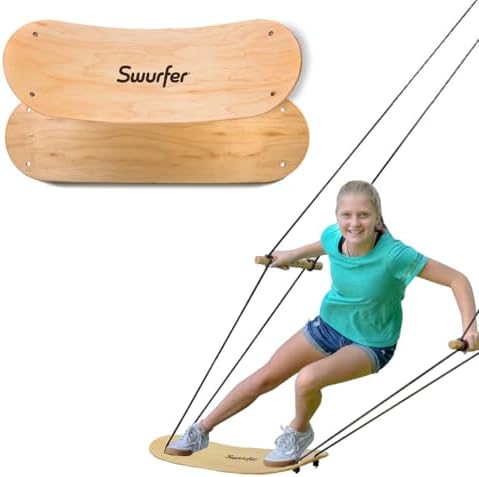 Holds 200 lb
Swurfer Stand Up TreeSkate Outdoor Swing
A tapered maple skate deck that hangs from a tree branch, built for riders six and up to carve back and forth in mid-air.
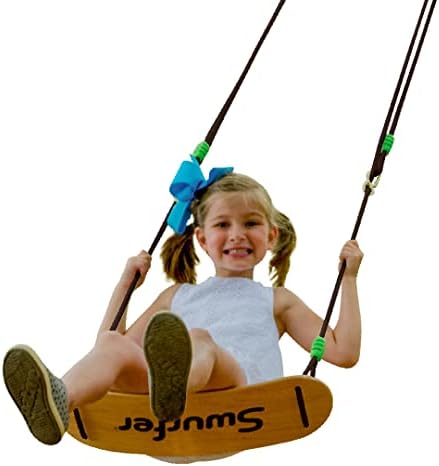 Holds 150 lb
Swurfer Tree Swing, Swing Sets for Backyard, Outdoor Swing -…
A solid maple plank swing cut for backyard branches, built with soft braided rope and rated for riders up to 150 pounds.
Sun fades plastic while steel rusts
Molded seats and disc swings handle water easily, but sunlight takes its own toll. After seasons of exposure, the smooth surface of the resin begins to chalk. A powdery haze forms over the bright pigment, turning deep shades dull and leaving a dry residue on a bare hand.
Hardware coatings resist rain until a friction point rubs through the outer layer. Where carabiners meet eye bolts or rings rub against brackets, bare metal shows through. Moisture settles on those scuffs, and orange surface rust marks the spot where the protective coating peeled away.
The practical spring inspection steps
Walk up to the tree in bright daylight before anyone climbs on the gear. Run a dry cloth along the deck and across the seat to clear dirt, dead leaves, and surface powder. Wipe down the metal parts so bare steel stands out against clean plating.
Work every mechanical piece by hand to check how it moves. Snap the buckle on a harness several times to clear grit from the latching springs. Slide adjusters along the rope, feel for stiff spots, and check where the line wraps around the limb.
Every material changes when left out in the cold, and inspecting the hardware each spring keeps you aware of normal outdoor wear.