
Materials
Maple, bamboo, molded plastic: what each seat is cut or molded from
Across our lineup, we build seats and decks from 7 different materials. How each surface handles sun, standing rain and years hung from a tree limb determines how you keep it through the seasons.
Timber decks cut from maple and bamboo
We cut 5 of our seats as rigid boards and round discs from maple or bamboo. Maple is the wood we use for standard production. Wood gives you a stiff platform that carries its weight underfoot without sagging, but it reacts to the open air. Left hung through long seasons, raw grain turns gray under direct sun and absorbs damp from long wet spells.
Bamboo is the single outlier across the timber range. We produce the bamboo stand-up deck as a limited edition run, whereas the standard stand-up board is maple. The bamboo deck carries a gentle curve, matching the profile on our maple sit-down boards, while the standard maple stand-up decks remain flat across the top surface.
Molded plastic shells through rain and sun
Molded plastic forms our toddler seats and rigid bucket swings. The plastic shell holds its molded shape under load and does not absorb standing water when the weather turns wet. Rain sits on the solid base rather than soaking in, because a molded plastic shell sheds water off the outer surface without drainage holes cut through the bottom.
The tradeoff with molded plastic is how it handles years in direct sunlight. While timber turns gray and can dry out, plastic gradually fades and can grow brittle under harsh sun. It requires zero oiling or wood treatments, but it lacks the weight and solid stiffness of a thick maple deck underfoot.
One seat per material
Each of these is cut or molded from something different. The label under each is the material.
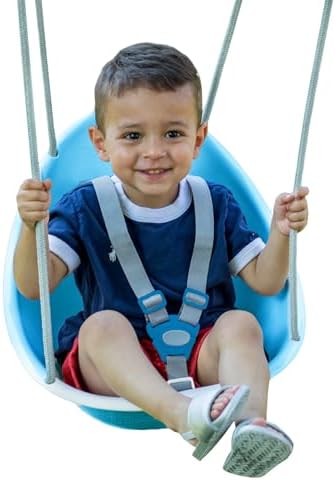 Holds 50 lb
Swurfer Coconut - Your Child's First Swing with Soft Braided…
Molded for small riders nine months and up, this blue shell seat hangs indoors or from a backyard tree limb with soft braided rope.
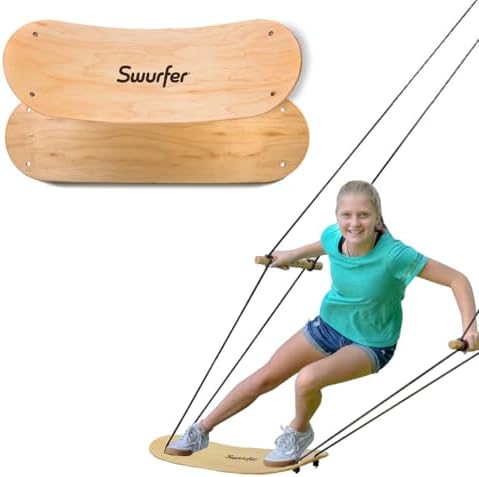 Holds 200 lb
Swurfer Stand Up TreeSkate Outdoor Swing
A tapered maple skate deck that hangs from a tree branch, built for riders six and up to carve back and forth in mid-air.
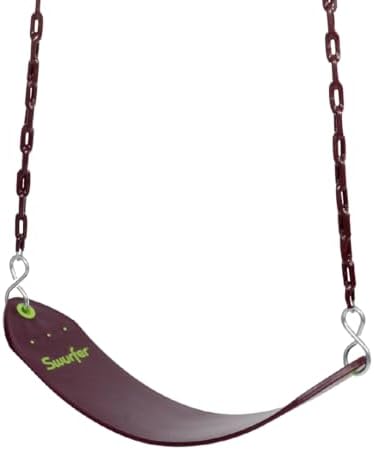 Holds 250 lb
Swurfer Tree Outdoor Swing Set Swings
A flexible belt seat with rubber-coated chains built to hang from a sturdy tree branch, a porch beam, or an existing swing set.
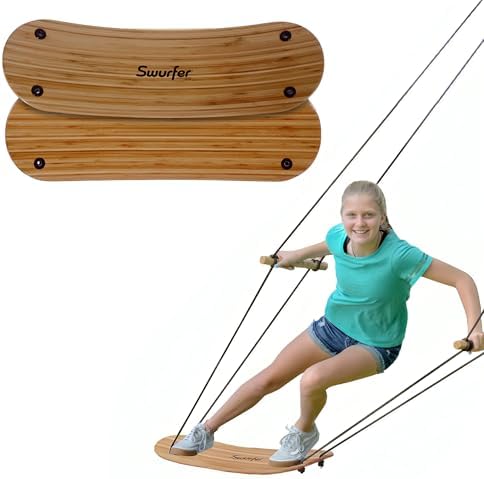 Holds 200 lb
Swurfer Stand Up TreeSkate Outdoor Swing
Carve through the backyard air on a curved bamboo board built for standing riders from age six up to two hundred pounds.
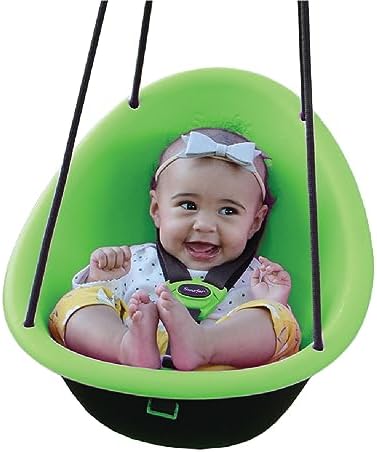 Holds 50 lb
Swurfer Kiwi Toddler Swing
A foam-lined molded seat with an adjustable three-point harness and soft braided rope, built for toddlers nine months and up.
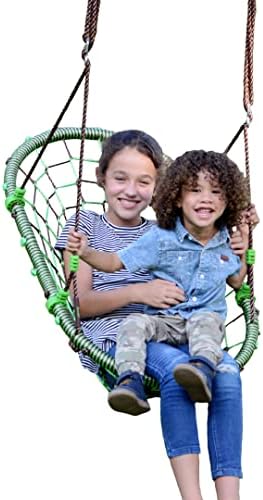 Holds 200 lb
Swurfer Tree Swing – Swing Chair, Outdoor Swings for Kids, Tree…
Woven bands across an alloy steel frame let riders recline or sit upright under a backyard branch on long afternoons.
Woven fabric discs and hanging belt seats
A flexible belt seat or a woven mesh disc works differently from any rigid board. A molded shell holds its fixed shape year round, while a woven band folds flat for storage when taken off the tree limb. The flexible webbing wraps around the rider rather than providing a firm deck to stand against.
Water behaves distinctively on these textiles. Water drains straight through only on the mesh saucer swing, passing through the open weave instead of pooling across the seat. A solid fabric saucer or rubber belt holds surface moisture longer until wiped down, but neither option will splinter or peel like weathered timber.
Matching seat profiles to frame structures
The profile of the swing is distinct from the substance it comes from. Flat and curved is a separate question from the material itself, since maple appears in both flat stand-up decks and curved sitting planks. How the rider meets the platform determines the curve, while the material determines how the object endures outdoors.
The supporting frames we publish across the range use maple, plastic, metal and alloy steel. Hard steel and rigid metals hold high weight limits without flexing, while maple frames bring the same solid grain characteristics as our decks. Each combination balances outdoor weathering against the physical shape of the ride.
Every material we shape responds to sun, damp air and storage in its own way throughout the year.